Vertical Coil Wrapping Machine Manufacturer in Ahmedabad, Gujarat
In modern industrial packaging, protecting metal coils during storage, handling, and transportation is essential. Steel, copper, and aluminium coils require secure packaging to minimise exposure to dust, scratches, moisture, and handling-related damage. A Vertical Coil Wrapping Machine efficiently wraps these products with suitable protective materials.
MakPack Machinery offers packaging machinery solutions that help industries improve packaging consistency, reduce repetitive manual work, and streamline production. Businesses looking for a Vertical Coil Wrapping Machine Manufacturer in Ahmedabad or a Vertical Coil Wrapping Machine Supplier in Gujarat should consider machine performance, coil specifications, automation requirements, and long-term operational efficiency.
This guide explains how a vertical coil wrapping machine works, its key benefits, industrial applications, and the factors to consider when selecting the right equipment.
What Is a Vertical Coil Wrapping Machine?
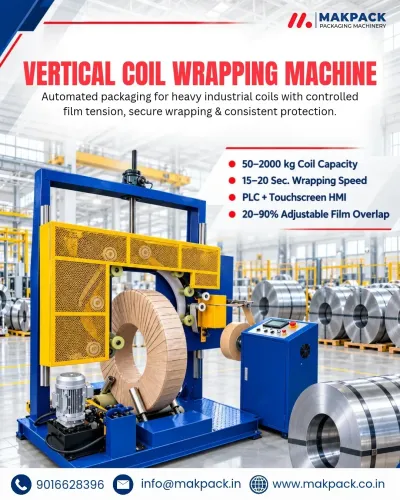
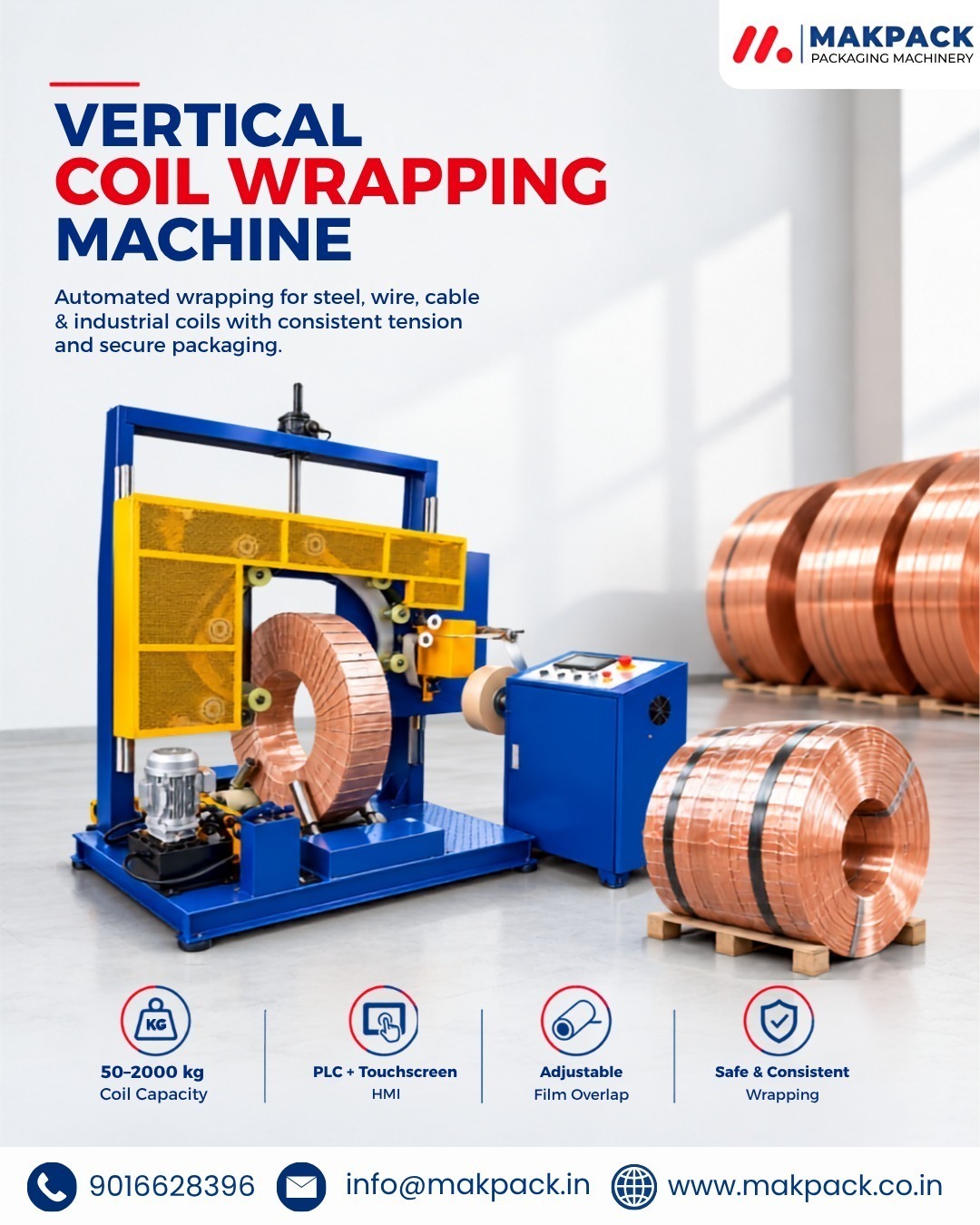
A Vertical Coil Wrapping Machine is an industrial packaging machine designed to wrap circular or ring-shaped products, including steel, copper, aluminium, and metal wire coils, in a vertical position. Depending on the machine configuration, it uses stretch film or other compatible protective packaging materials to secure the coil.
Unlike conventional manual wrapping methods, an automatic vertical coil wrapping machine helps standardise the packaging process by controlling wrapping patterns, film application, and cycle operations.
These machines are commonly used in steel manufacturing plants, metal processing facilities, wire production units, and industrial warehouses where secure and consistent coil packaging is essential.
How Does a Vertical Coil Wrapping Machine Work?
A vertical coil wrapping machine follows a structured process to provide consistent packaging. The operating procedure varies by machine model and automation level.
The typical working process includes:
Coil Loading: Operators position the coil on the designated support system using appropriate material-handling equipment.
Film Placement: Load and position the appropriate wrapping film according to the packaging requirements.
Wrapping Process: The machine wraps the coil with the wrapping material using its designated rotating or wrapping mechanism.
Film Tension Control: Adjustable settings help maintain suitable film tension and consistent coverage.
Film Cutting and Securing: Depending on the machine design, the film is cut and secured at the end of the wrapping cycle.
Coil Unloading: The machine removes the packaged coil and prepares it for storage or transportation.
Automation helps reduce repetitive manual tasks and supports more standardised packaging operations.
Why Is a Vertical Coil Wrapping Machine Important for Industrial Packaging?
Investing in a suitable vertical coil wrapping machine can help businesses improve packaging performance in several ways.
1. Faster Packaging Operations
Manual wrapping can be time-consuming when handling large volumes of metal coils. Automated wrapping equipment helps streamline the packaging cycle, allowing manufacturers to process coils more efficiently and maintain a consistent workflow.
2. Uniform and Consistent Wrapping
Controlled film application helps provide more uniform packaging than many manual methods. Consistent wrapping can minimise loose film, uneven coverage, and packaging inconsistencies.
3. Better Product Protection
Steel, aluminium, and copper coils may be exposed to dust, scratches, and handling-related damage. Suitable wrapping materials provide an extra layer of protection during storage and transport. Additional protective measures may be necessary when enhanced moisture or corrosion protection is required.
4. Reduced Manual Labour
Automating repetitive wrapping tasks reduces the need for workers to handle packaging materials manually throughout the cycle. Employees can focus on monitoring equipment, material handling, and other production activities while following appropriate safety procedures.
5. Optimised Packaging Material Usage
Depending on the machine configuration, adjustable film tension and wrapping parameters can help optimise packaging material consumption. Actual savings depend on coil dimensions, film quality, wrapping patterns, and operating settings.
6. Improved Workplace Safety
Handling heavy metal coils involves operational and ergonomic risks. A well-designed wrapping system, combined with appropriate lifting equipment, safety guards, emergency stops, and operator training, can improve workplace safety.
7. Better Production Efficiency
By reducing manual intervention and standardising packaging cycles, a vertical coil wrapping machine can support higher packaging productivity and more predictable operations.
What Are the Key Features of a Vertical Coil Wrapping Machine?
When selecting a Vertical Coil Wrapping Machine Manufacturer in Ahmedabad, businesses should evaluate the machine’s features against their production requirements.
Common features to consider include:
· Automatic Wrapping Cycle: Helps streamline repetitive packaging operations.
· Adjustable Wrapping Speed: Supports different production requirements.
· Film Tension Control: Helps maintain consistent wrapping quality.
· Multiple Wrapping Patterns: Accommodates different coil packaging needs.
· PLC-Based Controls: Provides controlled operating settings where available.
· Safety Systems: Supports safer operation through appropriate protective mechanisms.
· Flexible Coil Handling: Accommodates specified coil dimensions and weight capacities.
· Customisation Options: Allows machine configurations to match specific industrial applications.
· Feature availability depends on the selected machine model and configuration.
Which Industries Use Vertical Coil Wrapping Machines?
Vertical coil wrapping machines suit industries that require secure packaging of circular or ring-shaped materials.
Steel Manufacturing Industry
Steel producers use coil wrapping machines to prepare steel coils for storage, dispatch, and transportation.
Aluminium Processing Industry
Aluminium coils can be wrapped to protect their surfaces from dust, scratches, and handling damage.
Copper and Metal Wire Industry
Copper coils and wire products require suitable packaging to protect them during handling and shipment.
Metal Processing and Manufacturing
Manufacturers handling different types of coiled materials can use automated wrapping equipment to standardise packaging operations.
Warehousing and Logistics
Properly wrapped coils are easier to store and transport, helping streamline industrial material handling.
How Do You Choose the Right Vertical Coil Wrapping Machine?
Choosing the right machine depends on the material being packaged, production volume, and facility requirements.
Consider these factors before purchasing:
Coil Size and Weight: Verify the supported coil diameter, width, and maximum weight.
Production Capacity: Select a machine that meets your required packaging throughput.
Wrapping Material Compatibility: Confirm compatibility with the required stretch film or protective packaging material.
Automation Level: Determine whether a semi-automatic or fully automatic system suits your workflow.
Safety Requirements: Check the machine’s safety guards, emergency stops, and compatibility with your materials.
Maintenance and Technical Support: Evaluate spare-parts availability, service support, and maintenance requirements.
Customisation Requirements: Consider special coil dimensions, wrapping patterns, and integration with existing production lines.
Total Cost of Ownership: Assess equipment cost alongside labour, film consumption, maintenance, downtime, and expected output.
Comparing these factors can help you choose a reliable industrial coil wrapping solution for your business.
Why Choose MakPack Machinery for a Vertical Coil Wrapping Machine?
Choosing the right packaging machinery supplier is key to maintaining efficient industrial operations. Businesses looking for a Vertical Coil Wrapping Machine Supplier in Gujarat should focus on suitable machine specifications, application compatibility, technical guidance, and reliable after-sales support.
Keywords